A mission is a very important element in your path to success. In order to get there, you need to know where you are going. This applies to virtually every aspect of life and your personal mission is no different. You will never become the success you dream of without some type of mission.
Everyone needs to develop a vision of what their mission in life is. This vision needs to be converted into your mission and you need to develop a mission statement. Just like successful corporations develop a mission statement so that employees know what they are focused on, so should you. This mission statement will provide you with support and guidance as you progress through life. Your mission statement should be reviewed each morning when you are working on your Current Focus and Critical Action Items. This will help to reinforce the why in everything you do.
When writing a mission statement don't worry about getting too detailed, save that for your goals. You should keep you statement brief and to the point. I recommend a one to two sentence statement that provides an overview of who you are and what you do. One way to think about it is "What would I like people to say about me when I am gone?" Your mission statement can be an "I am" statement or if you prefer it can be in the third person. The main point is to develop your mission and write it down. Below are some examples of personal mission statements.
"I am a successful business person, loving family member, and respected member of the community that is extremely energetic and active, always helping others and creating successful businesses."
"Tom is well-known in the community for all the help he gives to others, respected by his co-workers for all his success in the computer programming field. Tom enjoys time with his family in their 5 acre ranch."
How you structure you mission statement is not what's important here. It's the substance that's important. Let your mission statement be something that inspires you each morning. Let your dreams go wild and write it down. You deserve to be anything you want and do all the amazing things you can dream of.
Cheers to Success!
Tony Booth
Showing posts with label Mission. Show all posts
Showing posts with label Mission. Show all posts
Thursday, September 17, 2009


Saturday, September 5, 2009
Believe In Your Goals
As we discuss often here, in order to be successful, you have to have goals. Not only do you need to have goals, they need to be written out and reviewed on a regular basis. What are your goals? Are they written and posted somewhere that you can see them often?
One of the biggest mistakes that I often see people make when writing and developing their goals is not making them believable. When you develop your goals they must be something that you look at and say "I can do that." If not there will always be that voice in the back of your mind saying "Yeah, Right." If you are currently working a 40 hour a week job making $50,000 per year and you write down a goal to be making $500,000 per year next year it's will be hard for you to believe it. Each time you review your goal, you will be thinking, "there's no way I will do that." And what about all of this Law of Attraction stuff? Didn't the secret say all I need to do is believe and it will come to me? Well that's partially true, the universe will provide you with what you desire. However, if you just go through the motions of writing out a goal and deep down inside you don't believe it won't happen.
Now if your working in a job making $50,000 per year and one of your goals is to make $500,000, that's fine. The part that would be hard to believe is that you are going to accomplish this in one year. Also, it will be hard to believe if you don't have some type of plan to make it happen. Let's look at it this way, here is an example. Let's say this person currently works at a printing shop taking orders and running the presses earning $20 per hour.
Bad Goal: I will earn a salary of $200,000 dollars in 2010.
Now-in his current situation, he will have to work a lot of hours to earn that kind of money
Better Goal: I will open my own printing business and earn a $200,000 salary by 2015.
Now this goal is easier to believe, it allows time for the drastic increase in salary and also tells how. Using a goal like this, we can now break the goal down into several smaller steps like:
In 2010 I will work extra hours and spend additional time working at the print shop so that I can learn about the business and earn an extra $6,000 dollars to put towards starting my own print shop.
In 2011 I will use the money I saved to start a printing business on the side while still working in my full time job, allowing me to earn an additional $1,500 per month.
In 2012 I will use the money I saved to open my own print shop with first year's sales of $300,000.
And the process continues on with details each year about how to improve the business. I know this example is a little stretched, but I hope you get the point.
Make sure that you goals are believable. We would have never reached the moon if we didn't believe we could do it.
Cheers to Success!
Tony Booth
Wednesday, August 12, 2009
Set Intentions
Now that you have your goals set and you know why you want to achieve them it’s time to start figuring out how you are going to achieve them. This how will become your intentions and will be your guide to setting you actions. While setting you intentions you need to look at each goal and determine what it is you intend to do to bring about the realization of that goal. This is the “how” part of your goals.
If your goal is to run the New York marathon you will need to sit down and determine how you will prepare to achieve this goal. You intentions may be;
· I will start working on a marathon training routine
· I will eat healthy and take care of my body
· I will perfect my running techniques
· I will increase my strength and endurance levels
These intentions will now become the frame work for guiding your actions. As you develop your intentions, it helps to add action steps to help guide you in the future. In the example above under the marathon training routine you might add;
I will start working on a marathon training routine
- I will run 5 days per week
- 3 times per week I will increase my overall distance by 5%
- 2 times per week I will run at various paces to build my stamina
As you determine your actions each day you will review them against you intentions to avoid any conflicts. When you have defined you intentions you will take actions daily that fit within your intentions.
Take some time to review each of your goals and develop you list of intentions. Depending on the goal, this list could be one or two intentions or could be a long list of sequential intentions. These are like small mini goals that you will do on a regular basis. So today, set out your intentions and start to make you dreams a reality.
Cheers to Success!
Tony
PS: My examples of a marathon training routine have no foundation and are not intended to provide any guidance on running a marathon. I have a hard enough time running to the mailbox.
Tuesday, August 11, 2009
Define Targets
Now that you have spent some time to determine you true values you can move on to defining your success targets. The next step to Focusing on Success is setting your goals/targets. In this step you need to clearly define what it is you would like to achieve. Take some time to sit down and dream about you success. Visualize into the future and determine what it is you would like to achieve and start writing down your goals. Remember to be sure and write SMART goals (Specific, Measurable, Attainable, Realistic, Timely).
· Specific: Be sure the goals you write are specific. Your goal should not read “I want to live in a large house”, it need to be specific like “I want to live in a 2,500SF home set on 5 acres of property.”
· Measurable: Make sure the goal is measureable. Similar to the example above, the 2,500SF now becomes the measuring stick by which you will compare your results.
· Attainable: Make sure that your goals are something that is reachable. For instance, if you are a 5’-6” tall, 40 year old male and you set a goal to become the starting center for the New York Knicks; that is an un-attainable goal. That doesn’t mean that you should not set a goal to be part of the New York Knicks franchise, it just means you need to set your goal for a different affiliation. You might determine that you want to be a talent scout for the New York Knicks.
· Realistic: You goal must be realistic. That can mean many different things depending on your goal and your current situation. The main thing to keep in mind here is, is you goal believable? Do you truly believe you can accomplish this goal?
· Timely: When setting your goals you will always need to set a timeline for reaching those goals. The timing can range from days to years, but you need to have a timeframe. Keep things in the relative near future for best results. I recommend having long term goals (5-10years) as broad objectives and more detailed goals set in 90 day time frames. These short-term goals can be sub-goals of your long term goals.
The goals you set are what will guide your actions in the future so don’t take this step lightly. The goal setting process is a must if you want to achieve a high level of success. Now, go have some fun, dream big, and write out some amazing goals.
Cheers to Success!
Tony
Friday, July 31, 2009
Focusing on Success
Focusing on Success is a process that anyone can use to gain more success in any part of their life. We all spend countless hours working on what we want out of life and trying to get where it is we want to go. Most of the time we feel like we are on a treadmill, working hard but getting nowhere. We use multiple techniques to help us get more things accomplished and have more free time only to find we are still on the treadmill. When does it all end? How can you get off the treadmill? It's easier then many believe. You don't have to be superhuman to accomplish great things. It just takes some focus management.
Focusing on success is about the process of focus management. By getting your focus zeroed in, you can eliminate wasted time and stress the overcomes your days. When you have your focus dialed in, you no longer need all those gadgets to help you plan your time and success efforts.
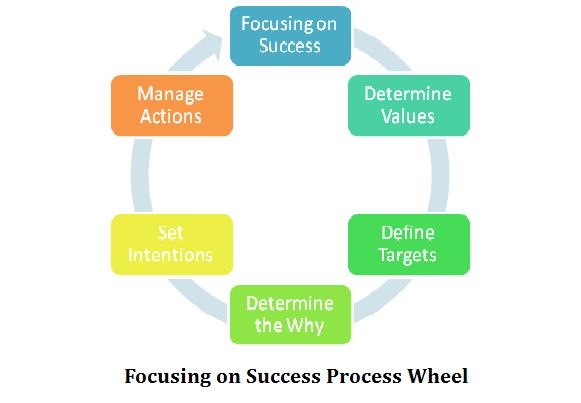
The process involves 6 simple yet complex steps. Many have heard the virtues of each of these steps before but very few practice them. You can bet, the uber-successful people we all read about practice these principles in some form or another. Ask Donald Trump or Sir Richard Bronson and you can be sure they have a defined plan and take action every day to accomplish that plan. That is really all we are talking about here.
Focusing on success breaks down into these 6 steps; Determine Values, Define Tragets, Develop the Why, Set Intentions, Manage Actions, and Focusing on Success. Each of these steps must be followed in order to get your mindset right for focusing on success. The steps build upon each other to get you in the proper frame of mind that allows you to work effortlessly in achieving all your life long desires.
Don't believe all those things you've heard in the past about how success is hard and riches are reserved for the few. Follow me through this journey to learn how you can change your focus and change your world. The possibilities are endless and results are easy.
Cheers to Success
Tony
Subscribe to:
Posts (Atom)

 Posts